Carvedilol
beta-blocker
Our referenceBy the Layer Nutrition editorial team · How the atlas classifies the 664 molecules
What this medicine is for
Carvedilol is a medicine in the "beta-blocker" category. Beta-blockers slow and relieve the heart and lower blood pressure. They are never stopped abruptly.
Specifically, for Carvedilol: Treats heart failure and high blood pressure. It is generally taken over the long term, as part of regular monitoring, and is not stopped on one's own initiative.
Under which brands it is found
Carvedilol is part of about 5 presentations listed in France. It can be found under several brand names and as generics.
- Carvedilol Arrow
- Carvedilol Eg
- Carvedilol Teva
- Carvedilol Viatris
- Kredex
Original brand-name products and generics deliver the same active substance; the choice between them is made with your doctor or pharmacist.
Our product for this treatment
You take Carvedilol. For people who follow this type of treatment every day, we have designed a dedicated product.

Layer Nutrition Beta-Blockers
Melatonin helps you fall asleep faster. Magnesium and vitamin B6 help you reduce tiredness during the day.
- Contributes to the reduction of time taken to fall asleep (melatonin 1 mg, at bedtime)
- Contributes to the reduction of tiredness (magnesium, vitamin B6)
- Contributes to normal muscle function and to the normal functioning of the nervous system (magnesium)
Melatonin 1 mg · Magnesium 100 mg · B6 1.4 mg
One bottle, one dose per day. Reduced price from the second box, free delivery from two boxes.
How carvedilol works
Carvedilol is a non-selective beta-blocker: it blocks both the beta-1 receptors, found mainly on the heart, and the beta-2 receptors, found on the blood vessels and the bronchi. To this it adds an alpha-1 receptor antagonist action, which dilates the peripheral vessels. This alpha-1 blockade lowers vascular resistance and reduces afterload, that is, the force against which the heart must eject blood. The dilation of the vessels is not accompanied by the usual reflex tachycardia, because the beta-1 blockade prevents the heart from racing; the effect on heart rate nonetheless remains more moderate than with a purely selective beta-blocker.
Beyond its action on the receptors, carvedilol has antioxidant properties and reduces the formation of oxidized LDL, the form of cholesterol most aggressive toward the artery wall. Its pharmacology is that of a mixture of two enantiomers, two mirror versions of the same molecule: the S(-) form carries most of the beta-blocking activity, while both forms contribute to the alpha blockade. The liver also transforms the molecule into the 4'-hydroxyphenyl metabolite, a hydroxylated derivative about thirteen times more potent than the parent drug at beta blockade. This dual action, on the heart and on the vessels, sets carvedilol apart from conventional beta-blockers.
Why it is prescribed
Carvedilol has three approved indications, all cardiac. The first is heart failure with reduced ejection fraction, that is, when the left ventricle no longer contracts strongly enough to eject a normal volume of blood with each beat. The second is arterial hypertension, where it lowers pressure by relaxing the vessels and slowing the heart. The third is left ventricular dysfunction after a myocardial infarction, in patients whose condition is stabilized.
In heart failure, the value of carvedilol lies in the fact that it protects the failing heart from constant stimulation by adrenaline and noradrenaline, those stress hormones that, over time, exhaust the muscle. By slowing the rate and lowering the workload, it gives the heart time to fill and recover. It is a long-term treatment: the benefit builds over time, and it is not judged on immediate sensation but on the course of the disease and medical follow-up.
How to take it day to day
Carvedilol is taken with a meal. The presence of food slows its absorption and reduces the frequency of orthostatic effects, those drops in blood pressure that cause dizziness on standing up. There is an immediate-release form, taken twice a day, and a controlled-release form, taken once a day. Treatment always begins at a low dose, on the order of 3.125 to 6.25 mg twice a day, then the dose is increased in gradual steps, which is called titration. This slow increase gives the heart and blood pressure time to adapt.
Regularity is the rule. Oral bioavailability is only about 25%, because a large part of the dose is captured by the liver on first pass, before reaching the circulation; the elimination half-life is between 7 and 10 hours, which explains the dosing schedule. A beta-blocker is never stopped on one's own and never abruptly: sudden discontinuation exposes the patient to a rebound, with acceleration of the heart and a rise in blood pressure. Any change in dose or discontinuation is decided with the doctor, who will adjust the pace.
The effects to know about
In studies on heart failure, compared with a placebo, dizziness affects 32% of people versus 19%, fatigue 24% versus 22%, diarrhea 12% versus 6%, a rise in blood sugar 12% versus 8%, weight gain 10% versus 7%, a slowing of the heart (bradycardia) 9% versus 1%, and a drop in blood pressure 9% versus 3%. In studies on hypertension, where the doses and patient profiles differ, dizziness concerns 6% of patients, bradycardia 2% and orthostatic hypotension 2%. Dizziness and fatigue dominate, especially at the start of treatment and during dose increases.
In people with diabetes, beta-blockers can raise blood sugar and mask the warning signs of hypoglycemia, in particular tachycardia, that rapid heartbeat that usually warns of a blood sugar level that is too low. Without this signal, hypoglycemia can go unnoticed, become severe or persist. This is why blood sugar is part of the monitoring, and why any unusual episode of sweating, confusion or weakness should be reported to the doctor.
Interactions and monitoring
Carvedilol is metabolized by the liver, mainly by the CYP2D6 and CYP2C9 enzymes, through oxidation followed by glucuronidation. This pathway explains several interactions. Inhibitors of CYP2D6, such as fluoxetine, paroxetine or quinidine, increase its blood concentrations; rifampicin, conversely, reduces them by about 70%. Amiodarone at least doubles the concentrations of the S(-) form, the most active, with a risk of bradycardia or conduction block; diltiazem and verapamil can also disturb cardiac conduction. Digoxin sees its concentration rise by about 15%, and agents that deplete catecholamines, such as reserpine or MAO inhibitors, expose the patient to severe hypotension and bradycardia. In people with diabetes, adding carvedilol to insulin or oral hypoglycemic agents strengthens their effect.
Monitoring accompanies these effects. Blood pressure and heart rate are measured before initiation and at each dose adjustment; blood sugar is checked, and digoxin is measured when it is co-prescribed, both when carvedilol is introduced and when it is stopped. Certain situations contraindicate the treatment: second- or third-degree atrioventricular block, severe bradycardia, sick sinus syndrome, decompensated heart failure requiring medications that stimulate the heart, active asthma or bronchospasm, and severe hepatic impairment. This framework of monitoring is what allows the dose to be adjusted as precisely as possible, person by person.
On the plate
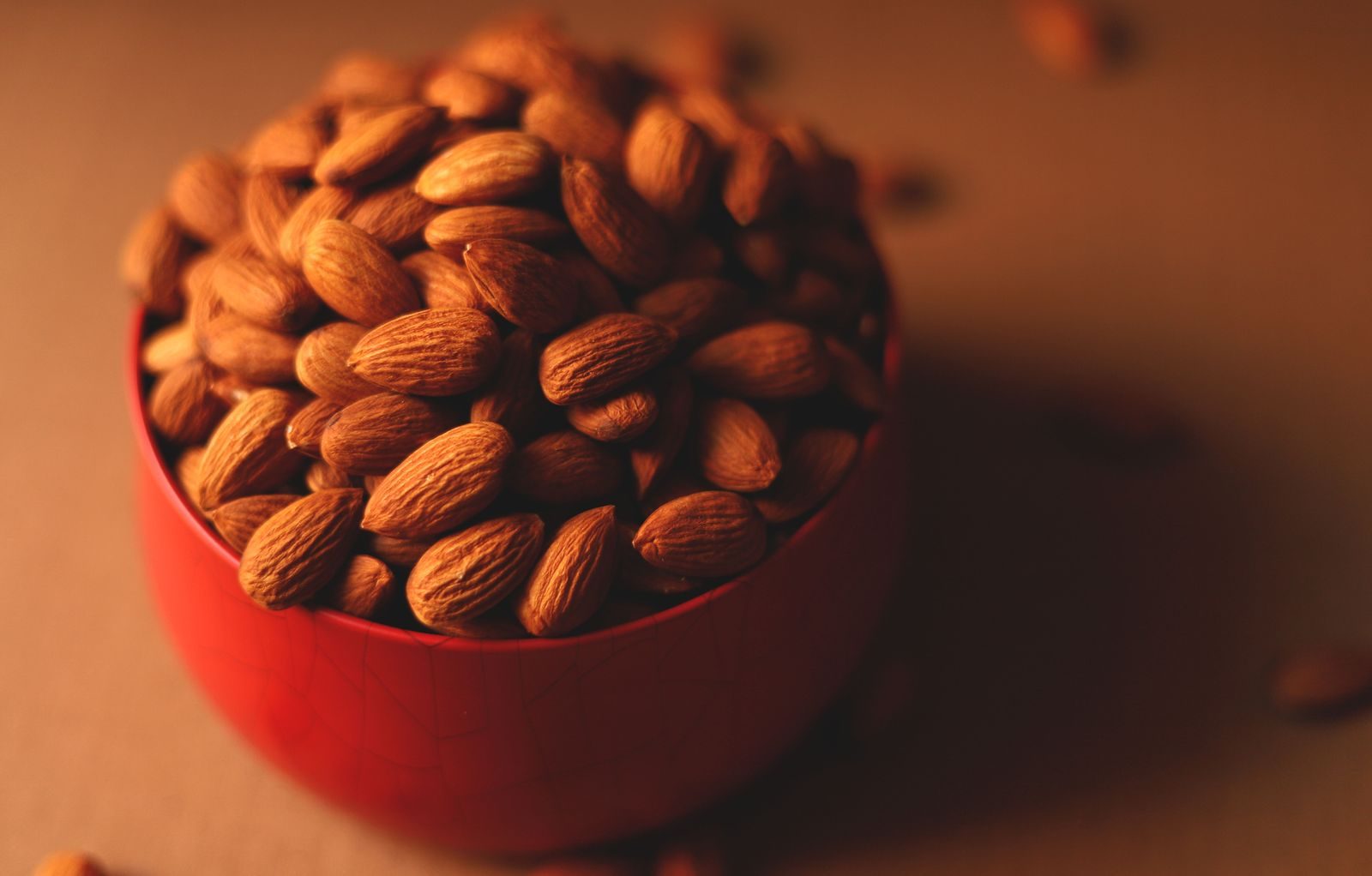
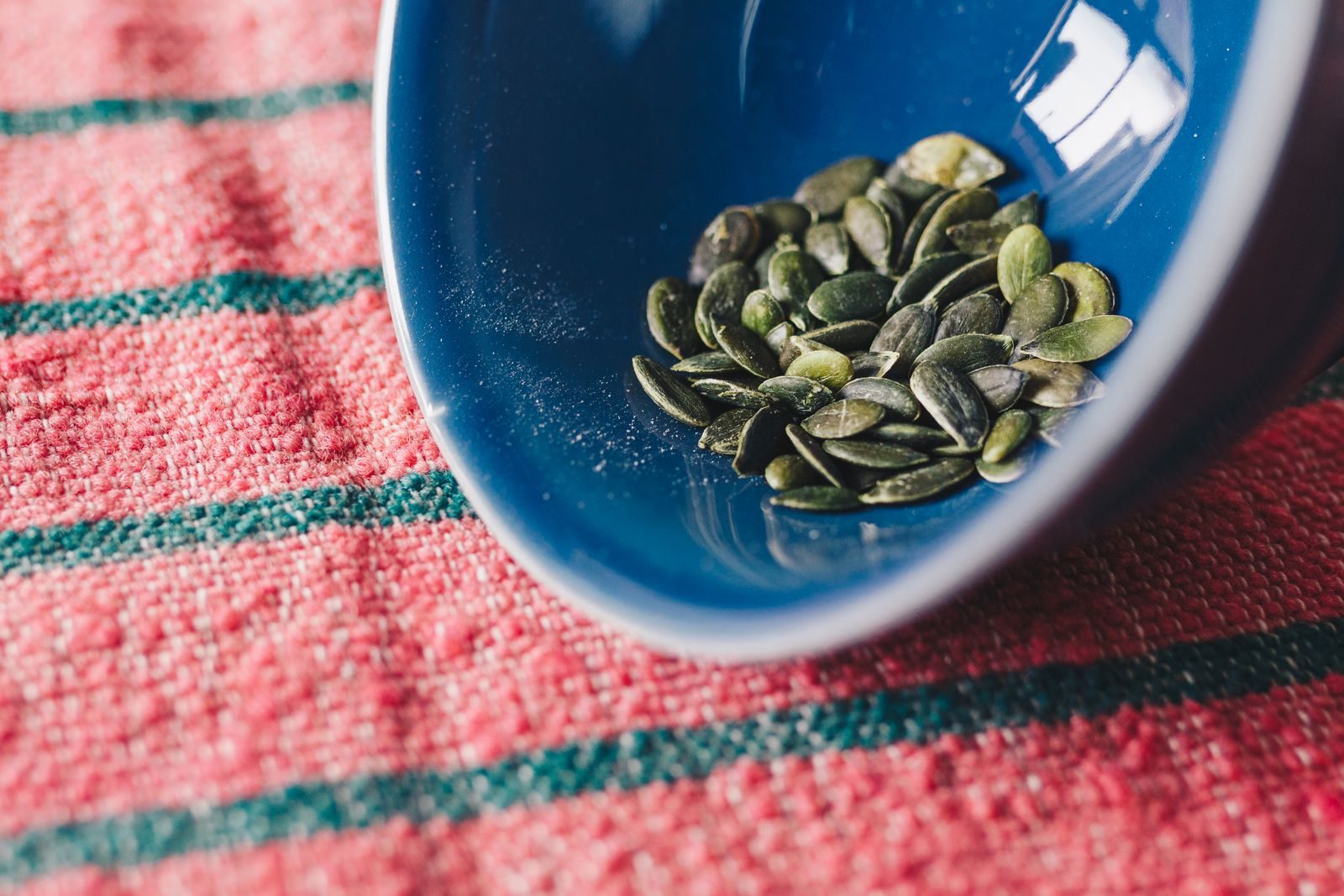
Diet does not replace treatment, but it works on the same cardiovascular ground. Magnesium plays a role in heart rhythm and blood pressure regulation, and it is found in abundance in spinach and other leafy green vegetables, almonds, pumpkin seeds, legumes, whole grains and dark chocolate. Vitamin B6 takes part in metabolism, and it is found in bananas, chickpeas, potatoes and fish. Since carvedilol can weigh on blood sugar, a plate rich in fiber and low in fast sugars, with legumes, vegetables and whole grains, supports a more stable sugar metabolism.
Melatonin, the hormone that prepares the body for sleep, exists in tiny amounts in certain foods such as walnuts and grains, but the plate provides only a minuscule fraction of it, nothing like what the body itself produces at night. Fatigue is among the most frequent effects of the treatment, and quality sleep then counts doubly. When a specific need takes shape, for magnesium, vitamin B6 or falling asleep, ordinary food is not always enough to meet it, and that is where a targeted intake makes sense, in addition to your treatment, never in its place.


Sources
Related molecules
To explore in the « Heart and blood pressure » family and its neighbours.
See the whole « Heart and blood pressure » family · Back to the atlas
Frequently asked questions
What is carvedilol used for?
Carvedilol is a beta blocker prescribed for high blood pressure, chronic heart failure and angina. For your specific situation, refer to the medication's patient leaflet and to your doctor or pharmacist.
What are the most common side effects of carvedilol?
The patient leaflet notably mentions dizziness, lightheadedness and fatigue, especially at the start of treatment. This information appears in the public patient leaflet; if you experience any discomfort, talk to your doctor or pharmacist.
Should you take carvedilol in the morning or at night?
The timing and frequency of your doses depend on the form prescribed and are indicated on your prescription and in the patient leaflet. Do not change this schedule without talking to your doctor or pharmacist.
Can you stop taking carvedilol suddenly?
The patient leaflet stresses that a beta blocker like carvedilol must not be stopped abruptly; it should be discontinued gradually and under supervision. Any decision to stop rests with your doctor.
Can you drink alcohol while taking carvedilol?
The patient leaflet notes that alcohol can heighten the dizziness and drop in blood pressure associated with carvedilol. For advice suited to your case, speak to your doctor or pharmacist.
Does grapefruit interact with carvedilol?
Grapefruit juice can alter the blood concentration of certain medications, and carvedilol's interactions are detailed in its patient leaflet. Tell your doctor or pharmacist about everything you take, including foods and supplements.
Does carvedilol cause weight gain?
Noticeable weight gain is mentioned among the effects to watch for while taking carvedilol, particularly in the context of heart failure. If you notice a rapid change, contact your doctor.
Is carvedilol suitable for elderly patients?
Older people may be more sensitive to certain effects such as dizziness, as the patient leaflet specifies. Adjusting the treatment is your doctor's responsibility, taking into account age and other medications.
Is there a generic version of carvedilol?
Carvedilol is the active substance, available as both brand-name and generic medications. Your pharmacist can tell you which presentation matches your prescription.
Can you take carvedilol during pregnancy or breastfeeding?
Pregnancy and breastfeeding are subject to specific precautions set out in carvedilol's patient leaflet. This situation should be decided solely with your doctor.
Can carvedilol affect sleep?
Research links the use of beta blockers to a reduction in the nighttime secretion of melatonin, the hormone that accompanies falling asleep (Stoschitzky et al., 1999). This is an associative phenomenon described in the literature, to be distinguished from a guaranteed effect in every individual.
What nutritional layer to consider with carvedilol?
On this sleep angle, our BB01 reference relies on melatonin and on magnesium in bisglycinate form, known to be well tolerated digestively. Melatonin helps reduce the time it takes to fall asleep and magnesium contributes to the normal functioning of the nervous system; monitoring through a blood test, if your doctor prescribes one, remains useful for fine-tuning.
Ces réponses portent sur le volet nutritionnel. Pour toute question sur votre médicament, la notice et votre médecin ou pharmacien font foi.