Pantoprazole
proton-pump inhibitor · PPI
Our referenceBy the Layer Nutrition editorial team · How the atlas classifies the 664 molecules
What this medicine is for
Pantoprazole is a medicine in the category "proton pump inhibitor (PPI)". Les inhibiteurs de la pompe à protons réduisent fortement la production d'acide par l'estomac. On les prescrit contre le reflux, les brûlures et l'ulcère, en cure courte ou sur la durée selon la situation.
For Pantoprazole, in practice: Reduces stomach acidity. It is most often a long-term treatment, taken at set times over long periods; its benefit is judged over time, not by how you feel on a given day.
Under which brands it is found
Pantoprazole is part of the composition of about 28 presentations listed in France. It is available under various trade names and as generics.
- Eupantol
- Inipomp
- Ipraalox
- Pantoprazole Almus
- Pantoprazole Arrow
- Pantoprazole Arrow Conseil
- Pantoprazole Biogaran
- Pantoprazole Cristers Pharma
- and other presentations
Original brand-name products and generics deliver the same active substance; the choice between them is made with your doctor or pharmacist.
Our product for this treatment
Pantoprazole is one of the everyday treatments for which we have formulated a targeted supplement.

Layer Nutrition PPI
Magnesium, vitamin C and B12 help you reduce tiredness. Vitamin D supports your bones, your muscles and your immune defences.
- Contributes to the reduction of tiredness (magnesium, vitamin C, B12)
- Contributes to normal muscle function and the maintenance of normal bones (magnesium, vitamin D)
- Contributes to the normal function of the immune system (vitamins C and D)
B12 500 µg · Vitamin C 180 mg · D3 20 µg · Magnesium 100 mg
One bottle, one dose per day. Reduced price from the second box, free delivery from two boxes.
How pantoprazole works
Pantoprazole belongs to the family of proton pump inhibitors, the PPIs. It blocks the enzyme H+/K+ ATPase, the proton pump located in the parietal cells of the stomach wall. This pump is the final step that releases acid into the stomach, and by neutralising it, pantoprazole strongly reduces gastric acid secretion. The molecule is a prodrug: it stays inactive until the acidity of the secretory canaliculi of the parietal cells cleaves and activates it, precisely where it needs to act.
Once activated, pantoprazole binds irreversibly to the pump. Acid secretion therefore stays suppressed for 24 to 48 hours, the time the cell needs to build new pumps, even though the molecule leaves the blood quickly: its plasma half-life is about one hour and its concentration declines in a biexponential way. The liver clears it, mainly through the enzyme CYP2C19 and, more marginally, through CYP3A4. This dual feature, a lasting action on the pump and a brief passage through the blood, explains why a single dose per day is enough.
Why pantoprazole is prescribed
Pantoprazole is prescribed when stomach acid causes damage or symptoms. It treats gastro-oesophageal reflux, where acid rises towards the oesophagus, as well as erosive oesophagitis, the resulting inflammation of the oesophageal wall. It also treats ulcer disease, that is, ulcers of the stomach and the duodenum. In these situations, acid keeps the pain going and prevents the tissues from healing.
It is also indicated in states of acid hypersecretion, such as Zollinger-Ellison syndrome, where a tumour drives the stomach to produce far too much acid. The principle stays the same from one indication to the next: by lowering acidity, pantoprazole lets the mucosa repair itself and calms symptoms such as heartburn. The choice of dose and duration depends on the cause, from passing reflux to a disease that requires long treatment.
How to take it day to day
Pantoprazole is usually taken once a day, in the morning, preferably about one hour before a meal. The tablet is swallowed whole with a glass of water, without chewing or crushing it. Proton pumps switch on at mealtimes, and the PPI works better when it is already in place when they start up.
Regularity matters as much as timing, because the effect relies on inhibition sustained day after day. It is better not to stop treatment on your own: after prolonged use, stopping can trigger a rebound, with acidity rising above its level before treatment. Any change to the dose or duration is decided with the doctor who set the indication.
The effects to know about
In clinical trials conducted in adults, the most frequent adverse effects were headaches, in 12.2% of people, diarrhoea in 8.8% and nausea in 7.0%. Then came abdominal pain in 6.2%, vomiting in 4.3%, flatulence in 3.9%, dizziness in 3.0% and joint pain in 2.8%. The NHS places several of these effects, headaches, diarrhoea, nausea, constipation, dry mouth or fatigue, at fewer than one person in a hundred in everyday use.
Serious effects remain rare, at fewer than one person in a thousand: liver damage, kidney damage, severe and persistent diarrhoea suggesting intestinal inflammation, or joint pain accompanied by a rash on areas exposed to the sun. By reducing the stomach's acid barrier, PPIs also increase the risk of digestive infections, including Clostridium difficile infection and other food-borne infections. These signs call for prompt medical advice rather than stopping on your own.
On the plate
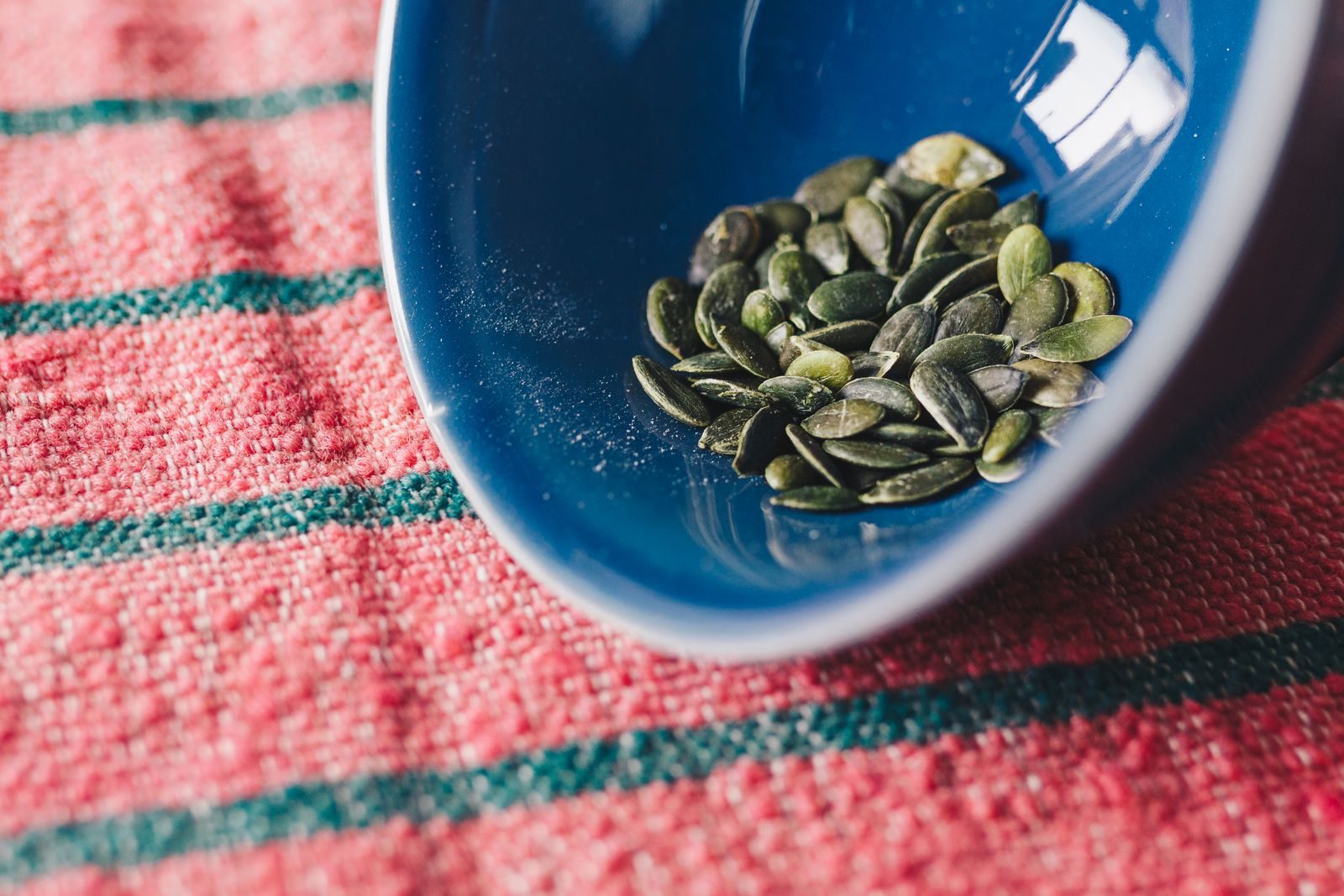
Prolonged treatment shifts two nutrients in particular. After three months or more, the level of magnesium in the blood may fall, to the point of causing fatigue, confusion, dizziness, muscle contractions and irregular heart rhythm; this fall is sometimes hard to correct while the PPI is continued, and severe hypomagnesaemia exposes a person to tetany, seizures and rhythm disorders. Magnesium is found in pumpkin seeds, almonds, dark chocolate, spinach, legumes and wholegrain cereals. The plate keeps the stores up meal after meal, without replacing a blood test when one becomes necessary.
The second nutrient is vitamin B12. By lowering the acidity that helps release it from food, a PPI taken for a year or more can lead to a deficiency, whose signs are intense fatigue, a red and sore tongue, mouth ulcers and tingling; the phenomenon remains clinically rare. Vitamin B12 comes almost solely from animal products: fish such as sardines, eggs, meat and dairy products. When absorption is slowed by the treatment, food alone does not always close the gap, and this is where a targeted intake makes sense, in addition to your treatment and never in its place.



Interactions and monitoring
Stomach acidity takes part in the absorption of certain medicines, so pantoprazole can change their effect. By lowering this acidity, a PPI reduces, for example, the absorption of an antifungal such as ketoconazole. The NHS for its part reports reduced absorption of antifungals such as itraconazole, posaconazole and voriconazole, as well as interactions with methotrexate, warfarin, rifampicin and HIV medicines; St John's wort, for its part, reduces its effectiveness. Since pantoprazole passes through the enzyme CYP2C19, the list of medicines and plants to report to the doctor or pharmacist deserves to be kept up to date.
Monitoring targets magnesium above all in people at risk, notably kidney transplant patients, in whom a blood test is recommended. Over time, the use of pantoprazole is associated with an increased risk of bone fractures and vitamin B12 deficiency, which monitoring seeks to spot before they appear. Finally, stopping after a long period is prepared with the doctor, because acid secretion can rebound above its initial level.
Sources
- Proton Pump Inhibitors - StatPearls (NCBI Bookshelf)
- Pantoprazole - LiverTox (NCBI Bookshelf)
- Pantoprazole Sodium Delayed-Release Tablet Label - DailyMed (FDA)
- Pantoprazole - MedlinePlus
- How and when to take pantoprazole - NHS
- Side effects of pantoprazole - NHS
- Taking pantoprazole with other medicines - NHS
Related molecules
To explore in the « Digestion and stomach » family and its neighbours.
See the whole « Digestion and stomach » family · Back to the atlas
Frequently asked questions
What are the side effects of pantoprazole?
The package leaflet most often lists headaches and digestive issues (diarrhea, nausea, stomach pain). Long-term treatment is subject to particular monitoring. For the full list and what applies to you, refer to the leaflet and talk to your doctor or pharmacist.
What is the difference between pantoprazole 20 mg and 40 mg?
These are two strengths of the same medicine, used depending on the situation. The choice of dose and duration is a medical decision. Refer to the leaflet in your box and ask your doctor or pharmacist for advice, without changing the dose on your own.
When and how should you take pantoprazole?
The gastro-resistant tablet is swallowed whole, generally before a meal. The exact timing and frequency are given in the leaflet and by your doctor. Follow that prescription and ask your pharmacist any questions rather than adjusting the dose yourself.
Is pantoprazole available over the counter?
Some low-dose forms are available over the counter for short-term symptoms, but most situations require a prescription. If heartburn persists, do not continue the treatment on your own: see your doctor or pharmacist.
Is long-term pantoprazole use dangerous?
Used over a long period, it warrants regular medical follow-up, especially beyond one year, to reassess the benefit and duration of the treatment. This decision is made with your doctor; the leaflet sets out the precautions for prolonged use.
Can you stop taking pantoprazole suddenly?
Stopping abruptly after long-term treatment can bring back acid symptoms (rebound effect). Do not stop on your own: how to stop or taper is decided with your doctor, who will tell you how to proceed.
Does pantoprazole have any drug interactions?
The leaflet flags interactions, notably with certain anticoagulants and other medicines whose absorption depends on stomach acidity. Tell your doctor or pharmacist about all your medicines, including over-the-counter ones, before combining them.
What is the difference between pantoprazole, omeprazole and esomeprazole?
These are three proton pump inhibitors (PPIs) from the same family, with similar uses. The choice between them is up to the prescriber depending on your profile. To compare what you are offered, speak to your doctor or pharmacist.
Can you take pantoprazole during pregnancy or breastfeeding?
The leaflet sets out rules for use during pregnancy and breastfeeding. If you are pregnant, planning to become pregnant or breastfeeding, do not start or continue this treatment without first talking to your doctor or pharmacist.
Should magnesium be monitored during long-term pantoprazole use?
In 2011 the ANSM reminded that long-term PPI treatments are subject to magnesium monitoring, with a blood test possibly considered before and then during treatment. This lab follow-up is decided with your doctor.
What form of magnesium to consider with a PPI like pantoprazole?
On the nutrition side, our IP01 reference provides magnesium as bisglycinate, a chelated form reputed to be better tolerated by the stomach. It complements a varied diet, without replacing medical follow-up or lab monitoring.
Can pantoprazole affect vitamin B12?
PPIs reduce stomach acidity; taken over a long period, they are associated with reduced absorption of vitamin B12. This is one of the nutritional cues behind IP01, which pairs vitamin B12 with magnesium; if in doubt, a blood test can be discussed with your doctor.
Ces réponses portent sur le volet nutritionnel. Pour toute question sur votre médicament, la notice et votre médecin ou pharmacien font foi.