Lansoprazole
proton-pump inhibitor · PPI
Our referenceBy the Layer Nutrition editorial team · How the atlas classifies the 664 molecules
What this medicine is for
Lansoprazole belongs to the category "proton pump inhibitor (PPI)". Proton pump inhibitors strongly reduce acid production by the stomach. They are prescribed against reflux, heartburn and ulcer, as a short course or over the long term depending on the situation.
For Lansoprazole, in practice: Reduces stomach acidity. It is most often a long-term treatment, taken at set times over long periods; its benefit is judged over time, not by how you feel on a given day.
Under which brands it is found
Lansoprazole is part of the composition of about 15 presentations listed in France. It is available under various trade names and as generics.
- Lansoprazole Almus Pharma
- Lansoprazole Arrow
- Lansoprazole Arrow Lab
- Lansoprazole Bgr
- Lansoprazole Biogaran
- Lansoprazole Cristers
- Lansoprazole Eg
- Lansoprazole Evolugen
- and other presentations
Original brand-name products and generics deliver the same active substance; the choice between them is made with your doctor or pharmacist.
Our product for this treatment
Lansoprazole is one of the everyday treatments for which we have formulated a targeted supplement.

Layer Nutrition PPI
Magnesium, vitamin C and B12 help you reduce tiredness. Vitamin D supports your bones, your muscles and your immune defences.
- Contributes to the reduction of tiredness (magnesium, vitamin C, B12)
- Contributes to normal muscle function and the maintenance of normal bones (magnesium, vitamin D)
- Contributes to the normal function of the immune system (vitamins C and D)
B12 500 µg · Vitamin C 180 mg · D3 20 µg · Magnesium 100 mg
One bottle, one dose per day. Reduced price from the second box, free delivery from two boxes.
How lansoprazole works
Lansoprazole belongs to the proton pump inhibitor family. It is a prodrug: the molecule that is swallowed is inactive and only converts into its active form after an acid-catalysed cleavage, in the acidic secretory canaliculi of the parietal cells of the stomach. This activation therefore occurs only at the very site where acid is produced, which concentrates its action where it is useful. Once activated, it blocks the H+/K+ ATPase enzyme, the proton pump that governs the final step of acid secretion.
By neutralising this pump, lansoprazole reduces the amount of acid that the stomach pours into its cavity. It is then taken up by the liver and processed by the cytochrome P450 enzymes, mainly CYP2C19 and, to a lesser extent, CYP3A4. This metabolic pathway explains part of the interactions with other medicines. Its half-life in the blood is short, about 1.5 hours, but its effect lasts far longer because it inhibits the pump in a lasting way.
Why it is prescribed
Lansoprazole is used when the stomach produces too much acid or when that acid keeps a lesion going. It treats gastro-oesophageal reflux and the oesophagitis that follows from it, ulcers of the stomach and the duodenum, as well as situations of excess acid secretion. It is also part of the regimens for eradicating Helicobacter pylori, in triple therapy with antibiotics. By lowering acidity, it gives the irritated mucosa the time to heal.
The first-line indications of proton pump inhibitors cover oesophagitis, non-erosive reflux, gastroduodenal ulcer disease and the prevention of ulcers caused by non-steroidal anti-inflammatory drugs. They are also prescribed in Zollinger-Ellison syndrome, a rare disease marked by massive acid production. The choice of duration depends on the indication: a few weeks to heal an ulcer, a more sustained treatment when reflux or the risk of ulcer persists.
How to take it day to day
Lansoprazole is taken once a day, before the meal, and the over-the-counter forms are taken in the morning before eating. Proton pumps become active during eating: taken before the meal, the capsule acts on pumps in full activity. The capsule label advises taking them before meals and notes that food does not modify their effect under these conditions. Regularity matters more than the occasional dose: it is the daily intake that keeps acidity low.
The short plasma half-life, around 1.5 hours, might suggest that the effect fades quickly, but the inhibition of the pump extends well beyond that. A single intake per day is thus enough to cover the day. This treatment is not stopped on one's own initiative: stopping it alone exposes you to the return of symptoms, sometimes with a rebound of acidity. Any change, discontinuation or dose adjustment is decided with the doctor or the pharmacist.
The effects to know about
The most frequent adverse effects involve the digestive tract and most often stay moderate. In placebo-controlled studies, diarrhoea concerns 3.8 % of people versus 2.3 % on placebo, abdominal pain 2.1 % versus 1.2 %, nausea 1.3 % versus 1.2 % and constipation 1.0 % versus 0.4 %. Headache and dizziness are also among the common effects. The gap with placebo remains small, and most of these complaints stay at a mild level.
Some effects appear only after prolonged use. A drop in blood magnesium, hypomagnesaemia, has been reported rarely, generally after at least three months of treatment and most often after one year. Observational studies also suggest a possible rise in the risk of fractures of the hip, wrist or spine, especially at high dose and over a duration of one year or more, but these data remain debated and the association is not consistent. It is these signals, along with the nutritional repercussions, that follow-up seeks to monitor.
On the plate
By lowering acidity, the treatment changes the way the stomach releases certain nutrients from food. Prolonged daily use, for example beyond three years, can hinder the absorption of vitamin B12, to the point that proton pump inhibitors are among the risk factors for B12 deficiency. Now this vitamin is found in products of animal origin: red meat, dairy products, cheese, yoghurt and eggs. Plant foods provide none, a point that weighs more when dietary intake is already limited.
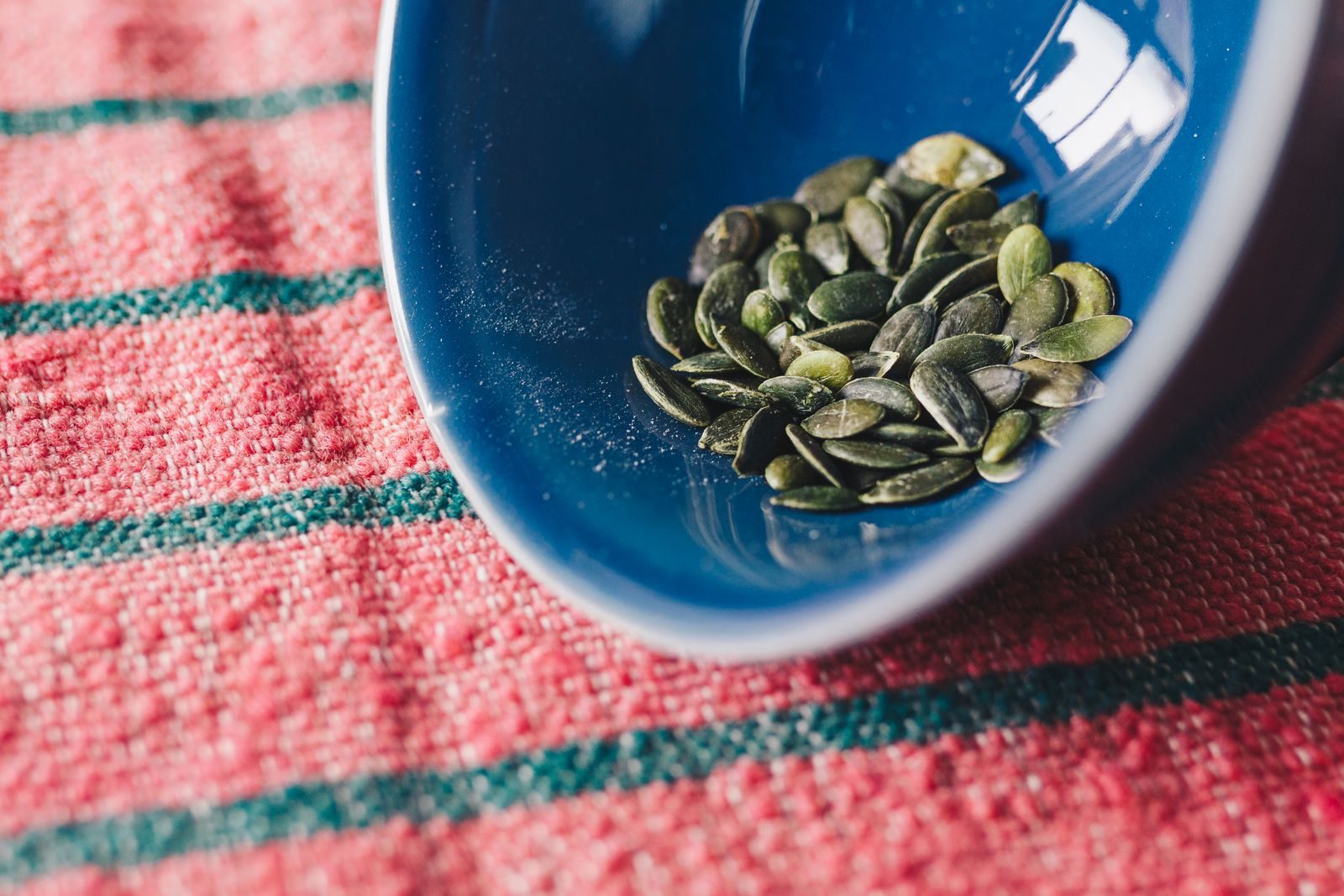
Prolonged use can also affect magnesium, iron and calcium, whose malabsorption has been reported. Magnesium is found in pumpkin seeds, almonds, walnuts, legumes, spinach and dark chocolate; iron in red meat and legumes; calcium in dairy products. A varied plate, rich in animal products and dense plant foods, covers a good part of these needs. When absorption is durably slowed, food alone does not always fill the gap, and that is where a targeted intake makes sense, in addition to your treatment, never in its place.



Interactions and monitoring
By reducing gastric acidity, lansoprazole changes the absorption of medicines that depend on the pH of the stomach. It can thus reduce the absorption of rilpivirine, whose combination is contraindicated, of atazanavir, nelfinavir, ketoconazole, itraconazole, iron salts, erlotinib, dasatinib, nilotinib and mycophenolate mofetil. Other interactions go through other pathways: on warfarin, a rise in INR and prothrombin time has been observed, with a risk of bleeding that calls for monitoring. With methotrexate, especially at high dose, concentrations can rise and stay elevated to the point of toxicity, so much so that a temporary stop of the inhibitor may be considered.
Lansoprazole can also increase exposure to digoxin and tacrolimus, whose concentrations then deserve to be monitored, and speed up the elimination of theophylline, whose dose is readjusted at both the start and the stop. On the nutritional side, biological screening of vitamin B12 is recommended in treated people, and magnesium can be checked during prolonged treatments. This follow-up, combined with the full list of your medicines shared with the doctor and the pharmacist, makes it possible to spot early what needs to be spotted.
Sources
Related molecules
To explore in the « Digestion and stomach » family and its neighbours.
See the whole « Digestion and stomach » family · Back to the atlas
Frequently asked questions
What is lansoprazole used for?
Lansoprazole is a proton pump inhibitor (PPI) that reduces acid production in the stomach. It is used in particular for reflux, ulcers and the eradication of Helicobacter pylori. For your specific situation, refer to the package leaflet and to your doctor or pharmacist.
What are the side effects of lansoprazole?
The package leaflet lists possible effects such as headaches, digestive problems (diarrhoea, nausea), dizziness or fatigue. They do not occur systematically and vary from one person to another. If an effect is bothersome or persistent, talk to your doctor or pharmacist.
Should you take lansoprazole in the morning or at night?
The package leaflet generally recommends taking it in the morning, before a meal, unless a specific regimen applies (for example during the eradication of H. pylori). The timing and frequency of doses depend on your treatment. Follow the leaflet and your doctor's instructions.
Does lansoprazole have any drug interactions?
Yes, the package leaflet reports interactions, for example with methotrexate or with anticoagulants such as warfarin (INR monitoring). Always tell your doctor or pharmacist about all of your medicines before combining a treatment.
Can you stop taking lansoprazole suddenly?
Stopping abruptly after prolonged use can be accompanied by acid rebound. The decision to stop or reduce should be made with your doctor, not on your own initiative. Refer to the package leaflet and to their advice.
Can you take lansoprazole during pregnancy or breastfeeding?
Data during pregnancy are limited and the package leaflet recommends caution. If you are pregnant, planning a pregnancy or breastfeeding, do not decide on your own: ask your doctor or pharmacist for advice before taking it.
Can you drink alcohol while taking lansoprazole?
Alcohol irritates the stomach lining and can promote acid production, which works against the goal of the treatment. For your situation, the package leaflet and your doctor or pharmacist remain the reference.
How long should you take lansoprazole?
The duration depends on the indication and ranges from a few days to several weeks according to the package leaflet. Prolonged use should be discussed and monitored with your doctor. Do not extend a course of treatment on your own without medical advice.
Is there a generic version of lansoprazole?
Lansoprazole is the active substance, available under several brand names and as a generic (gastro-resistant capsules, orodispersible tablets). The active substance content is the same. Your pharmacist can tell you which forms are available.
Lansoprazole and magnesium: what to watch for with long-term use?
In 2011, France's ANSM reported cases of hypomagnesaemia with long-term PPI use and recommends considering a blood magnesium test during prolonged treatment, particularly when combined with other medicines concerned. This is something to monitor with your doctor, based on your test results. On the nutrition side, if supplementation is considered, magnesium in bisglycinate form is well tolerated digestively; that is the option chosen for our IP01 reference.
Lansoprazole and vitamin B12: is there a link?
By reducing stomach acidity, a PPI taken over a prolonged period can decrease the absorption of vitamin B12 from food, and studies link long-term PPI use to an increased risk of deficiency. A blood test allows this to be assessed with your doctor. If supplementation is helpful, vitamin B12 is one of the nutrients considered in our IP01 reference.
Ces réponses portent sur le volet nutritionnel. Pour toute question sur votre médicament, la notice et votre médecin ou pharmacien font foi.